🔐 Biometric in Cybersecurity
Introduction
In today's **fast-paced digital world**, security threats are evolving rapidly. With cyberattacks becoming more sophisticated, relying solely on passwords **is no longer enough** to protect sensitive data.
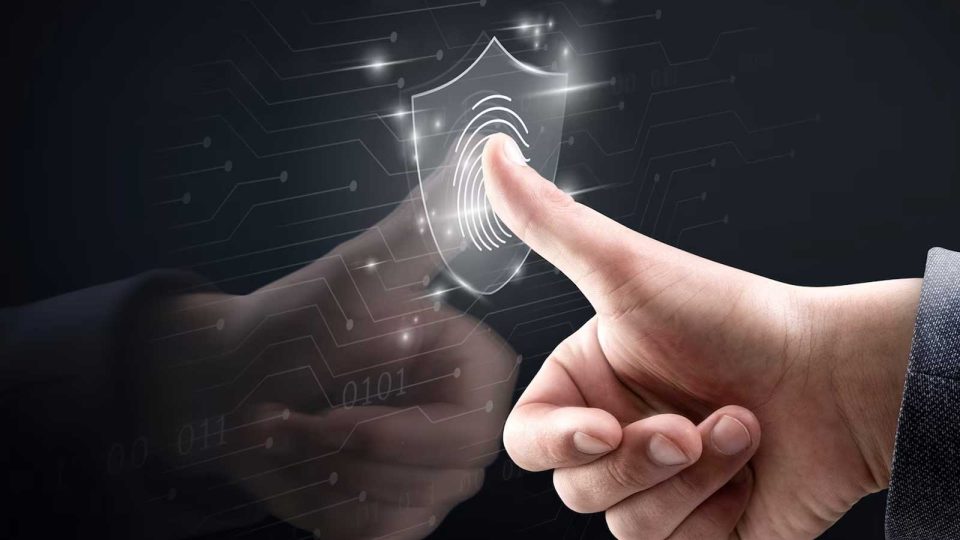
**Biometric authentication** has emerged as a cutting-edge solution that enhances security by using **unique biological characteristics** like fingerprints, facial recognition, and voice patterns.
But how does biometric security work? What are its **advantages, risks, and future developments**? Let’s explore **everything you need to know** about biometrics in cybersecurity!
What is Biometrics
**Biometrics** is the **science of using unique biological and behavioral characteristics** to verify an individual’s identity. This includes **fingerprints, facial recognition, iris scans, voice patterns, and even behavioral traits** like typing speed.
In **cybersecurity**, biometrics plays a crucial role in **access control** and **identity verification**. Instead of relying on passwords or PINs, organizations now integrate biometric authentication to **enhance security and prevent unauthorized access**.
Many modern devices, such as **smartphones, tablets, and laptops**, already use biometrics for secure login. Popular examples include **Apple’s Face ID**, **Samsung’s fingerprint scanner**, and **Windows Hello**.
Biometrics is also widely used in **banking, corporate security, healthcare, and law enforcement**. For example, banks use fingerprint authentication for secure transactions, while airports use facial recognition to verify passengers.
Unlike traditional security measures, **biometric authentication is more secure** because it is based on **physical or behavioral attributes that are unique to each individual**. This makes it **difficult for hackers to replicate or steal**.
However, while biometrics offers high security, **it is not foolproof**. Cybercriminals have found ways to manipulate biometric data using deepfakes and spoofing attacks. This is why **multi-factor authentication (MFA)**, which combines biometrics with other security layers, is recommended.
As technology advances, biometric security is continuously evolving. Researchers are developing **new forms of biometrics**, such as heartbeat recognition and vein pattern scanning, to further improve accuracy and security.
How Biometrics Works in Cybersecurity?
**Biometric authentication** is a process that **verifies a person's identity** by analyzing **unique biological traits** such as **fingerprints, facial features, iris patterns, or voice recognition**.
The biometric authentication process follows **three key steps**:
1. Enrollment Phase
The system **captures biometric data** (e.g., a fingerprint scan or facial scan).
This data is then **converted into a digital format** and securely stored as a **biometric template**.
2. Authentication Phase
When a user attempts to log in, the system **captures real-time biometric data**.
The new scan is **compared against the stored biometric template** in the database.
3. Verification & Access
If the new scan **matches** the stored template, **access is granted**.
If the system detects **any mismatch**, access is **denied** to prevent unauthorized entry.
The entire process takes just **a few seconds** but ensures **high-level security** compared to traditional passwords.
To enhance security, biometric systems **use encryption** and **multi-factor authentication (MFA)** to prevent cyber threats such as biometric spoofing.
Types of Biometrics in Cybersecurity
Biometric authentication relies on **unique physical and behavioral traits** to verify identity. Here are the major types:
1. Fingerprint Recognition
**How it works:** Captures fingerprint patterns and compares them with stored templates.
**Common Use:** Smartphones, laptops, biometric attendance systems.
2. Facial Recognition
**How it works:** Analyzes facial features using AI and matches them with stored data.
**Common Use:** Face ID on smartphones, security surveillance.
3. Iris Recognition
**How it works:** Scans the unique patterns in the iris using infrared light.
**Common Use:** High-security areas, border control systems.
4. Voice Recognition
**How it works:** Analyzes vocal tone, pitch, and frequency to authenticate users.
**Common Use:** Voice assistants (Alexa, Siri), customer service authentication.
5. Palm Vein Recognition
**How it works:** Uses infrared light to scan unique vein patterns in the palm.
**Common Use:** Healthcare, banking, and secure access systems.
6. Behavioral Biometrics
**How it works:** Analyzes typing speed, mouse movements, and walking patterns.
**Common Use:** Fraud detection in banking and cybersecurity applications.
**Biometric systems are constantly evolving** to provide **stronger and more secure authentication** methods.
Advantages of Biometrics in Cybersecurity
Biometric authentication offers **several security benefits** over traditional password-based systems. Here are the key advantages:
1. High Security & Accuracy
**Biometrics are unique to each person**, making them highly secure and difficult to replicate.
Unlike passwords, biometric data **cannot be easily guessed, stolen, or shared**.
2. Convenience & Speed
Biometric authentication is **faster than entering passwords or PINs**.
Users can access devices and accounts with **just a fingerprint or facial scan**, eliminating the hassle of remembering complex passwords.
3. No Need for Passwords
Removes the risk of **weak passwords, forgotten credentials, and phishing attacks**.
**Reduces human errors** that often lead to security breaches.
4. Difficult to Forge or Steal
Biometric data is **extremely difficult to forge or replicate** compared to passwords and ID cards.
Hackers cannot simply steal or guess biometric patterns like they can with passwords.
5. Enhanced User Experience
Provides a **seamless and hassle-free authentication process**.
Users do not need to remember or reset passwords, making it more user-friendly.
6. Multi-Device Compatibility
Biometrics are now supported on **smartphones, tablets, laptops, and secure access systems**.
Many modern devices come with **built-in biometric scanners**, making them widely accessible.
7. Reduces Identity Theft Risks
Prevents unauthorized access and **reduces fraud in online banking, e-commerce, and digital transactions**.
Biometric systems are used in **financial institutions** to prevent fraud.
8. Works as a Strong Layer in Multi-Factor Authentication
Biometrics can be used **alongside passwords or security tokens** for enhanced protection.
Used in **banking, government systems, and corporate security** for extra safety.
**The adoption of biometrics is rapidly increasing**, offering a secure and user-friendly alternative to traditional authentication methods.
Risks & Challenges
Despite its advantages, biometric authentication comes with **potential risks**:
- **Data Breaches** – Stolen biometric data **cannot be reset** like passwords.
- **False Positives & Errors** – Accuracy issues due to **lighting, aging, or injuries**.
- **Privacy Concerns** – If stored improperly, biometric data can be misused.
- **High Implementation Costs** – Advanced biometric systems require **high investment**.
Future of Biometrics in Cybersecurity
The future of biometric authentication is evolving with **advanced technology**. Innovations in AI and deep learning are making biometric security **faster, more accurate, and harder to bypass**.
1. AI-Powered Biometric Systems
Artificial intelligence (AI) is **improving biometric accuracy** and reducing false positives.
AI-powered systems can **detect spoofing attempts**, such as deepfake attacks or fake fingerprints.
2. Multi-Modal Biometrics
Combining multiple biometric factors (e.g., **fingerprint + face recognition**) will **enhance security**.
Multi-modal biometrics will be **more inclusive and reliable** for people with accessibility concerns.
3. Continuous Authentication
Instead of just verifying identity at login, future systems will **continuously monitor user behavior**.
AI will track typing speed, mouse movement, and facial expressions to **ensure ongoing security**.
4. Biometric Data Encryption
**Secure encryption methods** will protect biometric data from cyber threats.
Zero-trust security models will ensure biometric data is **never stored in a hackable database**.
5. Blockchain for Biometric Security
Blockchain technology will provide **decentralized and tamper-proof biometric authentication**.
Biometric credentials will be stored in a **distributed network**, reducing data breach risks.
6. Behavioral Biometrics
Future biometric security will analyze **voice patterns, keystroke dynamics, and walking styles**.
Behavioral biometrics will offer **real-time fraud detection** and prevent identity theft.
7. Integration with IoT Devices
Biometric authentication will be embedded in **smartwatches, home security systems, and IoT devices**.
Users will be able to unlock IoT-connected devices using **biometric authentication** for increased security.
8. Biometric Payment Systems
Future payment methods will rely on **fingerprint and facial recognition** for secure transactions.
Contactless biometric payments will make **transactions faster and more secure**.
**As biometric technology evolves, security measures must also improve to prevent misuse and ensure privacy.**
Conclusion
Biometric authentication is **revolutionizing cybersecurity**, balancing security and convenience. However, it must be implemented with **strong privacy protections** to prevent misuse.
As **cyber threats grow**, businesses and individuals must embrace **advanced biometric security** while ensuring data protection and ethical usage.